
When your business is ready to move beyond shared hosting or standard VPS packages, understanding Virtual Private Cloud (VPC) becomes essential. This guide explains what VPC is, how it protects your resources, and why UK businesses are increasingly choosing it over traditional hosting solutions.
What is a Virtual Private Cloud?
A Virtual Private Cloud is a private, isolated section of a public cloud infrastructure that gives you dedicated computing resources with the security and control of a private data centre. Think of it as having your own private section within a larger cloud environment, where you can build and manage your infrastructure exactly as you need it.
Unlike traditional hosting where you’re restricted to fixed packages, VPC lets you define your own resource pools for CPU, RAM, and storage, then divide these resources across multiple virtual servers as your needs evolve. You get complete control over your infrastructure’s architecture whilst benefiting from enterprise-grade hardware and network connectivity.
How VPC Isolates and Secures Your Resources
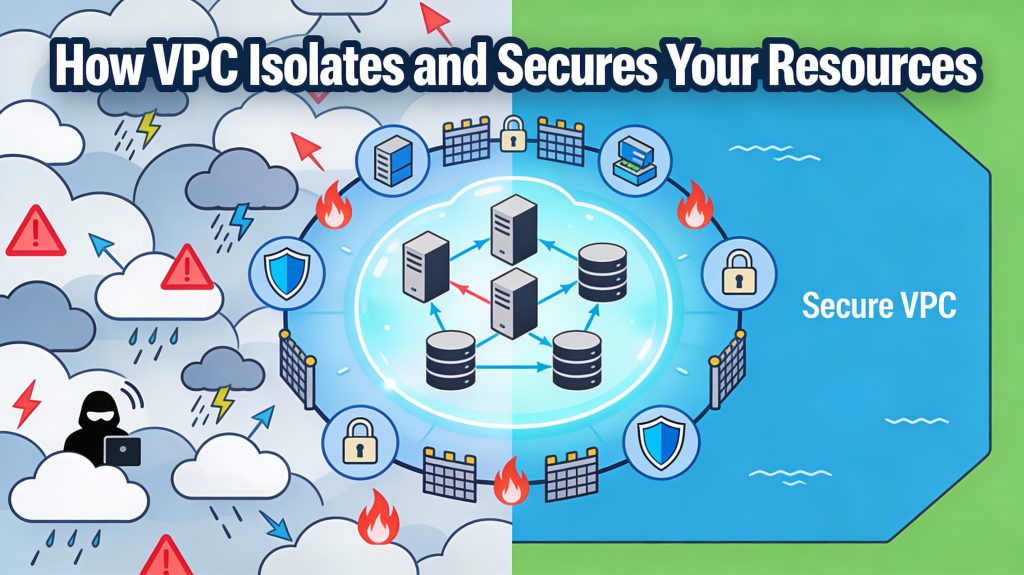
The security architecture of VPC is fundamentally different from shared hosting environments. Here’s how isolation works at multiple levels:
Network Isolation with Private vLAN
At the network level, VPC provides a dedicated virtual Local Area Network that’s completely separate from other users. Your servers communicate with each other through this private network, meaning internal traffic never touches the public internet. Database queries, application server communications, and file transfers between your servers remain invisible to outside networks.
This private vLAN operates with unmetered bandwidth, so you can architect your applications for optimal performance without worrying about internal network costs. A web application with separate database and caching servers can communicate freely at full speed within your private network.
Tenant Isolation
VPC implements strict tenant isolation at the hypervisor level. Your virtual machines run on resource allocations that other customers cannot access.
This isolation extends to the storage layer. Farbyte VPC uses triple-replicated distributed storage systems that maintain your data across multiple physical devices for resilience, but your data blocks are separated from other tenants data and you can choose to encrypt entire data volumes if you wish.
Firewall Protection
Each virtual server in a VPC environment receives its own stateful packet inspection firewall. You define exactly which ports and protocols can access each server from the public internet and your private vLAN. Your database servers can be configured to accept connections only from your application servers on the private network, never from the public internet, whilst your web servers handle public traffic.
This granular control lets you implement defence-in-depth security strategies, where each layer of your infrastructure has appropriate access controls.
Dedicated IP Addresses
VPC provides clean, dedicated IP addresses for your servers. Unlike shared hosting where dozens of websites share the same IP address (potentially inheriting reputation problems from neighbours), your IPs belong exclusively to your infrastructure. This is particularly important for email delivery, API integrations, and maintaining control over your network reputation.

Why UK Businesses Choose VPC Over Shared Hosting and Standard VPS
The decision to move from shared hosting or standard VPS to VPC reflects several critical business needs that traditional hosting struggles to address.
Outgrowing Shared Hosting Limitations
Shared hosting works well for simple websites, but falls short when applications become mission-critical. In shared environments, you have no control over resource allocation, meaning a traffic spike to another website on the same server can slow your application. You cannot configure server-level software, install custom dependencies, or architect multi-server solutions.
When your business relies on its web presence for revenue, these limitations become unacceptable. Customer experience suffers when your site slows during peak periods. E-commerce sites lose sales when checkout processes lag. Professional services firms lose credibility when their platforms underperform.
Moving Beyond Standard VPS Constraints
Standard VPS hosting solves some shared hosting problems by giving you a dedicated virtual server, but you’re still locked into predefined packages. If you need more RAM but not more CPU, you often must upgrade the entire package, paying for resources you don’t need. When you need multiple servers for different functions, you purchase and manage them separately, often at higher costs.
Standard VPS also typically lacks the private networking capabilities necessary for secure multi-server architectures. Your database server must either be exposed to the public internet (with associated security risks) or accessed through SSH tunnels and port forwarding, which adds complexity and latency.
The VPC Advantage for Growing Businesses
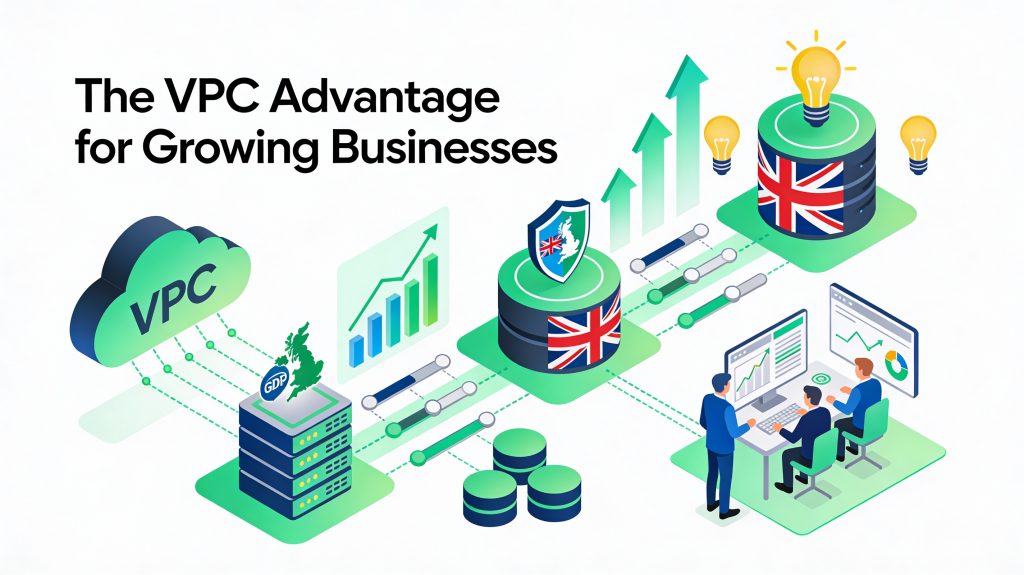
VPC addresses these limitations by providing infrastructure that scales with your needs rather than forcing you into predefined boxes. When you need additional application servers to handle increased traffic, you allocate more resources from your pool and deploy new servers within minutes. When a project requires substantial storage but minimal computing power, you configure resources accordingly.
This flexibility becomes particularly valuable for UK businesses managing compliance requirements. Data protection regulations increasingly require UK businesses to maintain control over data location and access. VPC hosted in UK data centres ensures your data remains within UK jurisdiction, simplifying compliance with GDPR and other regulatory frameworks.
Infrastructure Flexibility for Development Teams
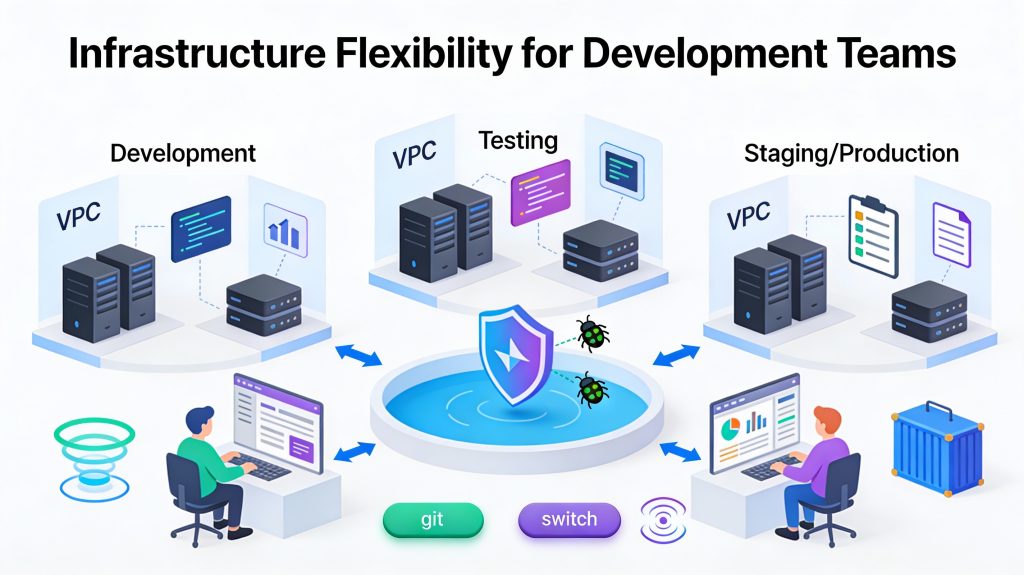
For businesses with development teams, VPC provides the flexibility to create proper staging environments. You can spin up replica servers for testing, take snapshots before major deployments, and maintain separation between development, testing, and production environments, all within your resource pool.
This capability significantly reduces the risk of deployments. When you can test changes in an environment identical to production, you catch issues before they affect customers.
Understanding UK Data Centre Advantages
Hosting location matters more than many businesses realise. When your VPC infrastructure operates from UK data centres, you benefit from several practical advantages:
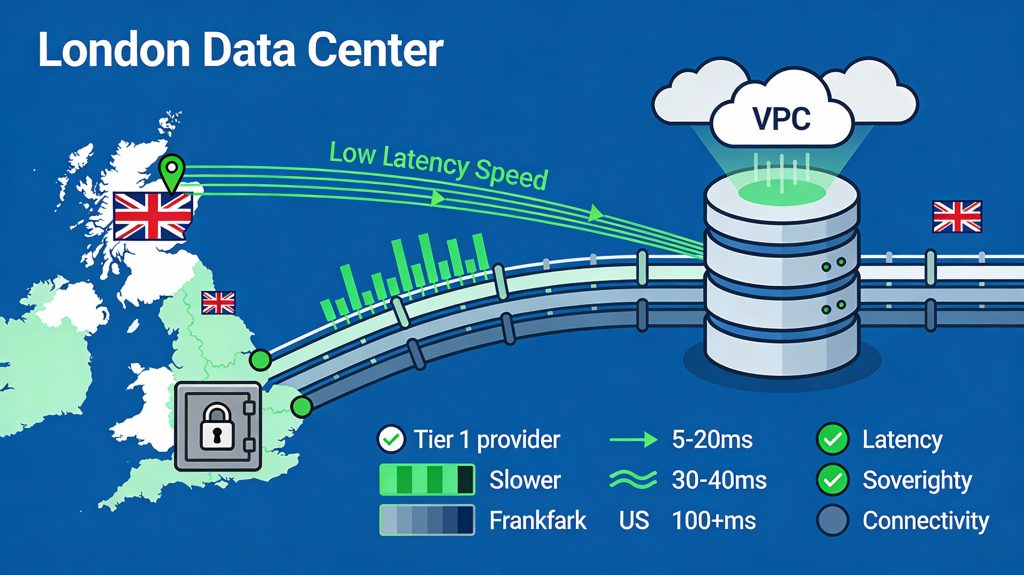
Latency: Every network hop adds milliseconds to response times. For UK users accessing UK-hosted servers, round-trip times typically measure 5-20 milliseconds. The same request to servers in Frankfurt might take 30-40 milliseconds, whilst US-hosted servers add 100-150 milliseconds. These differences compound across multiple requests, significantly impacting user experience.
Data sovereignty: UK data centre hosting means your data never crosses international borders during normal operations. This simplifies compliance documentation and reduces legal complexity around data protection.
Bandwidth quality: UK data centres connected to multiple Tier 1 network providers offer reliable, high-quality connectivity to UK internet users. Rather than your traffic routing through European exchange points before reaching UK users, it takes direct paths to UK networks.
When to Choose VPC
VPC makes sense when your infrastructure needs meet several criteria:
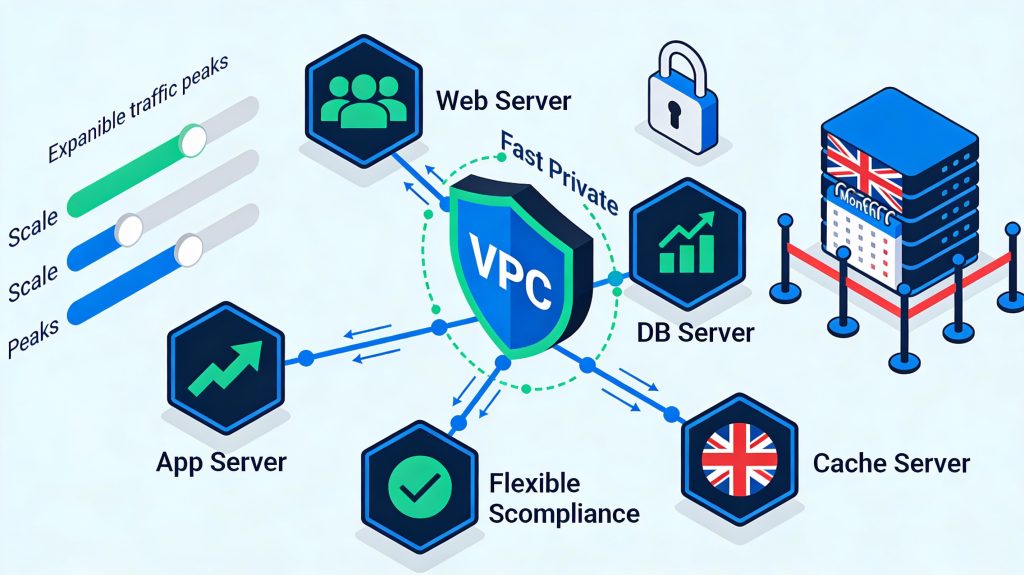
- You need multiple servers working together. A typical example might include web servers, application servers, database servers, and caching servers that need fast, secure communication with each other.
- Your application has grown beyond what shared hosting can reliably handle, but you need more flexibility than standard VPS packages provide.
- You require infrastructure that can scale to meet varying demand without purchasing entirely new server packages each time needs change.
- Security and compliance requirements mean you need dedicated resources with proper network isolation, rather than shared environments.
- You want UK-based infrastructure with predictable monthly costs rather than complex per-hour billing.
Getting Started with VPC
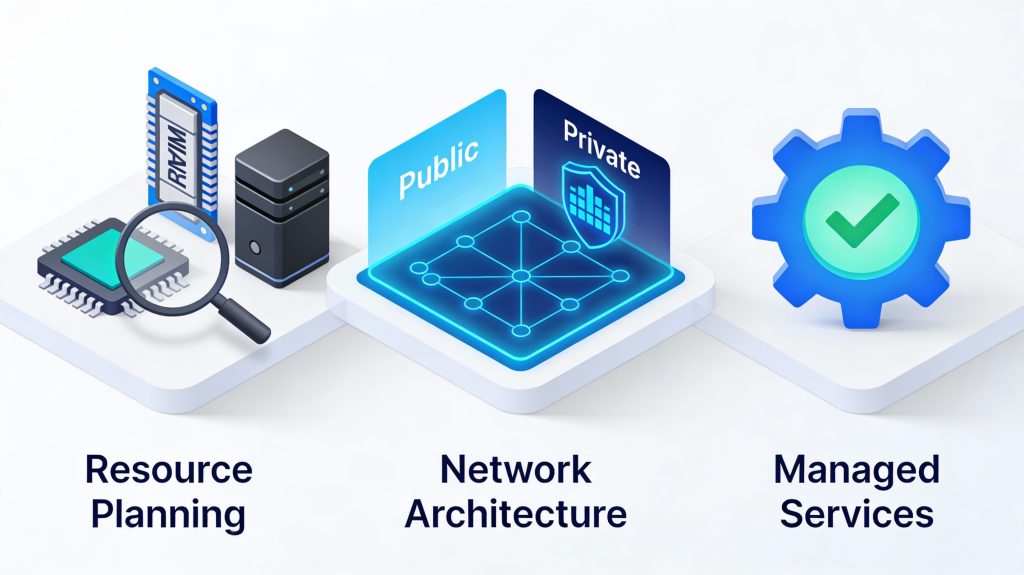
Transitioning to VPC involves planning your resource requirements and architecture. Start by assessing your current infrastructure usage to understand the CPU, RAM, and storage your applications actually need. Consider not just current usage but near-term growth projections.
Design your network architecture with security in mind. Which servers need public internet access? Which should communicate only on the private network? What firewall rules protect each component?
For businesses new to infrastructure management, managed VPC services handle the server administration whilst you focus on your applications. This includes operating system updates, security patching, and performance monitoring, providing the benefits of VPC without requiring dedicated system administrators.
Conclusion
Virtual Private Cloud represents the middle ground between expensive dedicated infrastructure and limiting shared hosting. For UK businesses with growing technical requirements, VPC provides the control, security, and flexibility needed to build reliable infrastructure whilst maintaining cost efficiency.
The combination of tenant isolation, private networking, dedicated resources, and UK data centre hosting addresses the key limitations businesses encounter with shared hosting and standard VPS solutions. As your infrastructure needs evolve from single websites to multi-server architectures, VPC provides the foundation to scale confidently whilst keeping your data secure and your costs predictable.